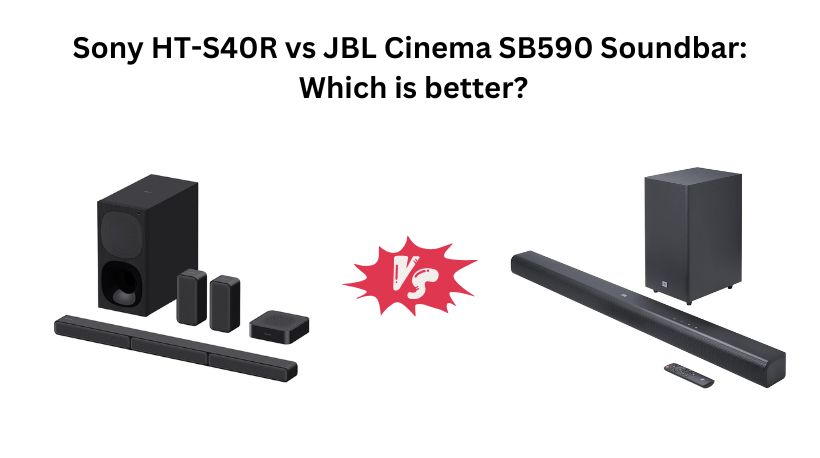
Choosing between the Sony HT-S40R and the JBL Cinema SB590 can be confusing because both are powerful home theatre soundbars designed for immersive movie and music experiences. However, they target slightly different users.
The Sony HT-S40R focuses on delivering true cinematic surround sound with dedicated wireless rear speakers and a real 5.1-channel setup. Meanwhile, the JBL Cinema SB590 focuses more on Dolby Atmos virtual surround effects, stronger vocal clarity, and deep bass performance in a simpler setup.
If you want the best home theatre experience for movies and gaming, one of these soundbars clearly stands out. Let’s compare them in detail.
Why Search Everywhere? Use Comparly for Your Next Comparison.
Sony HT-S40R vs JBL Cinema SB590 Soundbar: Specs Comparison
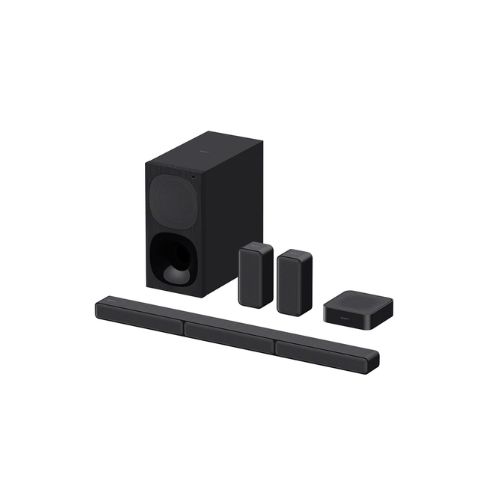
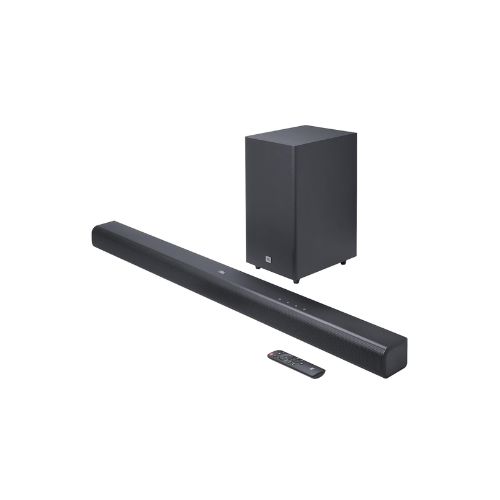
Feature Sony HT-S20R JBL Cinema SB190 Channels 5.1 Channel 2.1 Channel Total Power Output 400W 380W Surround Sound Real 5.1 Surround Virtual Dolby Atmos Rear Speakers Yes No Subwoofer Wired External Subwoofer Wireless Subwoofer Bass Performance Strong & Balanced Deeper & Punchier Best For Movies & Surround Experience Bass Lovers & Simpler Setup Customer Rating 4.6★ (21,294 reviews) 4.2★ (949 reviews) Price ₹17,990 ₹17,999
🏆 Which is Better Sony HT-S40R or JBL Cinema SB590?
👉 Overall Winner: Sony HT-S40R
The Sony HT-S40R is the better overall soundbar for most users because it delivers true 5.1-channel surround sound with dedicated rear speakers, much higher 600W power output, and a more cinematic home theatre experience. It is especially better for movie lovers, gaming setups, and large living rooms where immersive surround sound matters.
The JBL Cinema SB590 is still a very good option if you prefer a cleaner setup with virtual Dolby Atmos effects, stronger dialogue clarity, and a wireless subwoofer. It works well for casual movie watching and music listening, but it cannot match the real surround sound experience of the Sony system.
Top 3 Reasons to Pick Sony HT-S40R
1. True 5.1 Channel Surround Sound
Sony includes dedicated wireless rear speakers, creating genuine surround audio instead of simulated surround effects.
2. Higher 600W Audio Output
The extra power delivers louder, fuller, and more cinematic sound performance for bigger rooms.
3. Better Home Theatre Experience
The combination of rear speakers, Dolby Digital, and deep bass creates a more immersive movie experience than JBL’s virtual Atmos system.
Want to compare more products like this? Use Comparly for Your Next Comparison.
Design & Build Quality
The Sony HT-S40R comes with a complete home theatre-style setup that includes a main soundbar, wired subwoofer, and wireless rear speakers. The overall design looks modern and premium while maintaining Sony’s minimalist styling. Because of the separate rear speakers, the system feels more like a true cinema audio setup rather than a standard soundbar.
The JBL Cinema SB590 has a cleaner and simpler design. You only get the main soundbar and a wireless subwoofer, which makes installation easier and reduces cable clutter. JBL has designed it more for users who want immersive sound without placing extra speakers around the room. The soundbar itself looks sleek and compact, making it ideal for smaller entertainment setups.
If you prefer a minimal setup with fewer speakers, JBL feels more convenient. However, if you want a true theatre-like arrangement, Sony looks and feels more premium overall.
Sound Performance & Audio Quality
This is the biggest difference between these two soundbars.
The Sony HT-S40R delivers real 5.1-channel surround sound using dedicated rear speakers. This creates genuine directional audio where sounds move around the room naturally. During movies, explosions, background effects, and action scenes feel much more immersive because sound comes from multiple directions.
Sony’s 600W output also gives it stronger room-filling performance. The sound remains powerful even at higher volumes, making it excellent for large living rooms and home theatre environments.
The JBL Cinema SB590 uses a 3.1-channel setup with Virtual Dolby Atmos technology. Instead of physical rear speakers, JBL digitally simulates surround effects. While the Atmos processing creates a wider soundstage, it still cannot fully match real rear speakers in immersion.
However, JBL performs very well in dialogue clarity thanks to its dedicated center channel. Voices sound cleaner and more focused during movies and TV shows.
For pure cinematic immersion, Sony clearly wins. For casual users wanting clearer vocals and easier setup, JBL performs very well.
Dolby Audio & Surround Experience
The Sony HT-S40R supports Dolby Digital with real 5.1-channel separation. Since it includes dedicated rear speakers, the surround experience feels more natural and accurate. You can clearly hear directional effects from behind, which greatly improves action movies and gaming.
The JBL Cinema SB590 supports Virtual Dolby Atmos. Atmos virtualization attempts to simulate height and surround effects without physical upward-firing or rear speakers. It creates a spacious sound field, but the effect depends heavily on room size and seating position.
In smaller rooms, JBL’s Atmos effect feels impressive. But in larger rooms, Sony’s real surround setup delivers a much more convincing home theatre experience.
Bass Performance
Bass lovers will appreciate both systems, but they deliver bass differently.
The Sony HT-S40R’s subwoofer produces strong and deep low frequencies that complement action scenes and music playback. Since the system has higher overall power, bass feels heavier and more cinematic.
The JBL Cinema SB590 uses a wireless 6.5-inch subwoofer that delivers punchy bass with excellent convenience. The wireless design makes placement easier, reducing cable management issues.
JBL’s bass feels cleaner and tighter for music listening, while Sony’s bass feels larger and more powerful for movies and gaming.
If you want powerful cinematic bass, Sony performs better. If you want cleaner everyday bass with easier placement, JBL is more convenient.
Dialogue Clarity
JBL has a slight advantage here.
The Cinema SB590 includes a dedicated center channel specifically designed to improve vocal clarity. Dialogue in movies, news, and TV shows sounds very crisp and understandable even during loud action scenes.
Sony’s HT-S40R also performs well with vocals, but its focus is more on overall surround immersion rather than center-channel speech enhancement.
Users who mainly watch TV shows, sports, and dialogue-heavy content may prefer JBL’s clearer voice performance.
Connectivity & Ease of Use
The Sony HT-S40R offers Bluetooth, HDMI, Optical, and USB connectivity. Sony also includes wireless TV connection support for compatible Sony Bravia TVs, which adds extra convenience for Sony ecosystem users.
The JBL Cinema SB590 includes HDMI eARC, Bluetooth, and Optical connectivity. HDMI eARC is an advantage because it supports better audio transmission and simplified TV control.
Sony offers slightly more connection options overall, while JBL provides a more modern and streamlined HDMI eARC experience.
Installation & Room Setup
The JBL Cinema SB590 is easier to install because it only requires the soundbar and wireless subwoofer. This makes it better for apartments, smaller rooms, or users who dislike managing multiple speakers.
The Sony HT-S40R requires more setup because of the rear speakers and wired subwoofer. Although the rear speakers connect wirelessly to the amplifier, there are still more components involved.
However, the extra setup effort results in significantly better surround immersion.
Gaming Performance
Gamers will likely prefer the Sony HT-S40R.
The real rear speakers improve positional audio in games, helping players hear footsteps, explosions, and environmental effects more accurately. Racing games and FPS titles feel much more immersive with Sony’s true surround sound.
JBL’s virtual Atmos effects still improve gaming audio over standard TV speakers, but they do not provide the same directional accuracy as physical surround speakers.
Music Performance
For music listening, both soundbars perform well but with different strengths.
Sony produces larger, room-filling sound with strong bass and wide stereo imaging. It works especially well for live concerts and energetic music.
JBL delivers cleaner vocals and slightly more balanced tuning for everyday music playback. Pop vocals and acoustic tracks sound more refined on the JBL system.
Music lovers wanting balanced clarity may enjoy JBL, while users wanting louder party-style sound may prefer Sony.
Price & Value for Money
The Sony HT-S40R costs slightly more at ₹26,990, but it justifies the higher price with:
- Real 5.1 surround sound
- Wireless rear speakers
- Higher 600W output
- Better cinematic immersion
- Excellent long-term reliability
The JBL Cinema SB590 at ₹24,999 offers good value for users wanting:
- Easier setup
- Dolby Atmos virtualization
- Better dialogue clarity
- Wireless subwoofer convenience
For overall home theatre value, Sony gives more performance for the money.
Final Verdict
Buy the Sony HT-S40R if you want the best overall home theatre experience, true 5.1 surround sound, dedicated rear speakers, stronger 600W power, and more immersive movie and gaming audio. It is the better choice for users who want a real cinematic setup in their living room.
Buy the JBL Cinema SB590 if you want a simpler soundbar setup with Virtual Dolby Atmos, cleaner dialogue clarity, wireless subwoofer convenience, and easier installation. It is better suited for casual entertainment and smaller rooms.
Overall, for most buyers looking for the best immersive sound experience, the Sony HT-S40R is the stronger and more complete soundbar system.